ICD-10 Code for Hyperlipidemia Explained: E78 Classification, Diagnosis, and Billing Accuracy
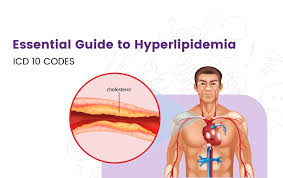
Hyperlipidemia is a lipid metabolism disorder characterized by abnormally elevated levels of cholesterol, triglycerides, or both in the bloodstream. Clinically, it is a major risk factor for cardiovascular conditions such as coronary artery disease, myocardial infarction, stroke, and atherosclerosis. Because hyperlipidemia is frequently asymptomatic, accurate diagnosis and documentation rely heavily on laboratory findings rather than clinical presentation alone.
In medical coding, hyperlipidemia is classified under ICD-10-CM category E78 (Disorders of lipoprotein metabolism and other lipidemias). This category includes multiple diagnosis codes that reflect the specific type of lipid abnormality, such as E78.0 (pure hypercholesterolemia), E78.1 (pure hypertriglyceridemia), E78.2 (mixed hyperlipidemia), and E78.01 (familial hypercholesterolemia). When clinical documentation lacks specificity, E78.5 (hyperlipidemia, unspecified) is commonly used, though it may limit clinical clarity and payer acceptance.
From a medical billing and reimbursement perspective, selecting the correct ICD-10 code for hyperlipidemia is essential. Accurate coding supports medical necessity, reduces claim denials, strengthens risk stratification, and ensures appropriate reimbursement across Medicare and commercial payers. Clear provider documentation—supported by lipid panel results, clinical assessment, and treatment plans—allows coders to assign the most specific diagnosis code and maintain compliance with ICD-10-CM guidelines.
What is Hyperlipidemia?
Hyperlipidemia is a medical condition defined by elevated levels of lipids—primarily cholesterol and triglycerides—in the bloodstream. These lipids circulate in the body as lipoproteins, including low-density lipoprotein (LDL), very low-density lipoprotein (VLDL), and high-density lipoprotein (HDL). Hyperlipidemia most commonly involves elevated LDL cholesterol, triglycerides, or a combination of both, which contributes to plaque buildup in arterial walls and significantly increases the risk of cardiovascular disease.
Clinically, hyperlipidemia may be classified as primary (genetic) or secondary (acquired). Primary hyperlipidemia includes inherited conditions such as familial hypercholesterolemia, where abnormal lipid levels are present from an early age due to genetic mutations. Secondary hyperlipidemia develops as a result of lifestyle factors or underlying medical conditions, including obesity, diabetes mellitus, hypothyroidism-related metabolic conditions, chronic kidney disease, and the use of certain medications
From a diagnostic standpoint, hyperlipidemia is typically identified through laboratory testing, such as fasting or non-fasting lipid panels, rather than through symptoms. Elevated LDL cholesterol, increased triglycerides, or abnormal non-HDL cholesterol levels form the basis of diagnosis and guide treatment decisions.
In medical coding, hyperlipidemia is reported using ICD-10-CM category E78, which captures disorders of lipoprotein metabolism and other lipidemias. The most appropriate ICD-10 code for hyperlipidemia depends on the documented lipid abnormality. When documentation specifies the type of lipid elevation, coders should assign a more specific E78 subcategory rather than defaulting to an unspecified diagnosis. Accurate classification supports clinical decision-making, payer compliance, and appropriate reimbursement.
Symptoms of Hyperlipidemia
Hyperlipidemia is often referred to as a “silent” condition because it typically does not produce noticeable symptoms in its early or moderate stages. Many individuals with elevated cholesterol or triglyceride levels remain asymptomatic for years, which makes routine screening and laboratory testing essential for timely diagnosis and risk management.
Because symptoms are usually absent, hyperlipidemia is most commonly identified through lipid panel testing, including measurements of total cholesterol, LDL cholesterol, HDL cholesterol, and triglycerides. These laboratory findings play a critical role in both clinical diagnosis and ICD-10 coding for hyperlipidemia, as the presence and type of lipid abnormality must be supported by objective test results.
In more advanced or untreated cases, complications related to prolonged lipid elevation may occur. These complications are often the first clinical manifestations of hyperlipidemia and may include:
Coronary artery disease and atherosclerosis
Chest pain (angina) due to reduced blood flow to the heart
Myocardial infarction (heart attack)
Cerebrovascular events such as stroke or transient ischemic attacks
Peripheral artery disease
Acute pancreatitis, particularly in cases of severe hypertriglyceridemia
From a documentation and billing perspective, it is important to note that the absence of symptoms does not negate the diagnosis of hyperlipidemia. Providers should clearly document abnormal lipid values, associated risk factors, and treatment plans to support medical necessity. This level of documentation allows coders to assign the most accurate ICD-10 code for hyperlipidemia and helps prevent claim delays, denials, or downcoding by payers.
Distinguishing Hyperlipidemia from Dyslipidemia
Although the terms hyperlipidemia and dyslipidemia are often used interchangeably in clinical practice, they are not identical in meaning. Understanding the distinction is important for accurate diagnosis, documentation, and ICD-10 coding.
Dyslipidemia is a broad term that refers to any abnormal level of lipids in the blood, including elevated, reduced, or imbalanced cholesterol and lipoprotein levels. This may involve high LDL cholesterol, low HDL cholesterol, elevated triglycerides, or a combination of lipid abnormalities.
Hyperlipidemia, by contrast, specifically refers to elevated lipid levels, most commonly increased LDL cholesterol, triglycerides, or both. It does not include conditions where lipid levels are abnormally low. For this reason, hyperlipidemia is considered a subcategory of dyslipidemia, focused exclusively on excess circulating lipids.
From an ICD-10-CM perspective, both conditions are commonly reported under the E78 category (Disorders of lipoprotein metabolism and other lipidemias). However, the specific code selection depends on provider documentation. When documentation clearly states elevated lipid levels, hyperlipidemia codes such as E78.0, E78.1, E78.2, or E78.5 are appropriate. If the documentation describes broader lipid abnormalities without specifying elevation, coders may still rely on the E78 classification but should seek clarification when necessary.
| Feature | Hyperlipidemia | Dyslipidemia |
|---|---|---|
| Definition | Elevated lipid levels | Any abnormal lipid levels |
| Scope | Narrower | Broader |
| Includes low HDL | No | Yes |
| Focus | High cholesterol and/or triglycerides | Lipid imbalance of any type |
| ICD-10 Category | E78 | E78 |
| Coding Specificity | Requires documentation of lipid elevation | Depends on documented lipid abnormality |
Coding takeaway:
While ICD-10-CM does not always distinguish between hyperlipidemia and dyslipidemia through separate categories, clinical specificity improves code accuracy. Clear documentation of elevated lipid values supports the correct use of hyperlipidemia-related ICD-10 codes and strengthens payer compliance.
ICD-10 Code for Dyslipidemia
Dyslipidemia is a broad clinical term used to describe any abnormal lipid levels in the blood, including elevated, reduced, or imbalanced cholesterol and lipoprotein values. In ICD-10-CM, dyslipidemia is not assigned a separate category and is generally classified under the E78 category (Disorders of lipoprotein metabolism and other lipidemias), similar to hyperlipidemia.
When documentation specifically identifies elevated cholesterol or triglycerides, more precise diagnoses such as pure hypercholesterolemia (E78.0), pure hypertriglyceridemia (E78.1), or mixed hyperlipidemia (E78.2) should be reported. In cases where the medical record broadly documents lipid abnormalities without clear specification, E78.5 (hyperlipidemia, unspecified) may be used, though clarification is recommended whenever possible.
From a coding and billing perspective, clear documentation of the specific lipid abnormality allows for more accurate ICD-10 code selection, improved medical necessity support, and reduced payer scrutiny.
ICD 10 codes for Hyperlipidemia
ICD-10-CM codes play a critical role in the accurate diagnosis, documentation, and billing of lipid metabolism disorders. Hyperlipidemia is classified under ICD-10-CM category E78, which includes multiple diagnosis codes designed to reflect the specific type of lipid abnormality documented in a patient’s medical record. Selecting the most precise ICD-10 code for hyperlipidemia helps establish medical necessity, minimizes claim denials, and supports appropriate reimbursement across Medicare and commercial payers.
| ICD-10 Code | Description | When to Use |
|---|---|---|
| E78.0 | Pure hypercholesterolemia | Use when documentation confirms elevated LDL cholesterol without elevated triglycerides |
| E78.1 | Pure hypertriglyceridemia | Appropriate when triglycerides are elevated with normal or near-normal cholesterol levels |
| E78.2 | Mixed hyperlipidemia | Use when both cholesterol and triglyceride levels are elevated |
| E78.01 | Familial hypercholesterolemia | Assigned when genetic or familial hypercholesterolemia is clinically documented |
| E78.3 | Hyperchylomicronemia | Used for rare disorders involving excessive chylomicrons and severe triglyceride elevation |
| E78.5 | Hyperlipidemia, unspecified | Use only when clinical documentation does not specify the type of lipid abnormality |
Whenever possible, healthcare providers and medical coders should avoid the use of unspecified diagnosis codes. Overreliance on E78.5 (hyperlipidemia, unspecified) can reduce clinical clarity and increase payer scrutiny, potentially leading to claim delays or denials. Clear provider documentation—supported by lipid panel results, clinical assessment, and treatment plans—enables coders to assign a more specific hyperlipidemia ICD-10 code and remain compliant with ICD-10-CM coding guidelines.
ICD-10 Code for High Cholesterol
High cholesterol is one of the most common lipid abnormalities encountered in clinical practice and is frequently searched as a standalone term rather than as “hyperlipidemia.” In ICD-10-CM, high cholesterol is most accurately reported using code E78.0 (Pure hypercholesterolemia) when documentation confirms elevated low-density lipoprotein (LDL) cholesterol without significant triglyceride elevation.
When provider documentation clearly identifies elevated cholesterol levels—supported by lipid panel results—E78.0 should be used instead of E78.5 (hyperlipidemia, unspecified). Using a specific diagnosis code improves clinical clarity, supports medical necessity, and reduces the likelihood of payer requests for additional documentation.
If medical records reference “high cholesterol” without specifying lipid fractions or provide incomplete laboratory detail, E78.5 may be used temporarily, though coders should seek clarification whenever possible. Accurate differentiation between high cholesterol and other lipid disorders ensures proper risk stratification, compliant billing, and alignment with payer coverage policies.
Why Accurate ICD-10 Coding Matters for Hyperlipidemia Billing
Accurate ICD-10 coding for hyperlipidemia is essential not only for clinical documentation but also for successful medical billing and reimbursement. Because hyperlipidemia is typically managed as a chronic condition, payers closely evaluate diagnosis specificity, supporting documentation, and treatment plans before approving claims.
Using the correct ICD-10 code for hyperlipidemia helps establish medical necessity for services such as lipid panel testing, follow-up visits, and long-term pharmacologic management. When claims are submitted with vague or unspecified diagnosis codes—such as overreliance on E78.5 (hyperlipidemia, unspecified)—payers may request additional documentation, delay claim processing, or deny reimbursement altogether.
From a revenue cycle management perspective, accurate hyperlipidemia coding supports:
Clear justification for lipid panel testing and repeat laboratory monitoring
Appropriate reimbursement for evaluation and management (E/M) services
Alignment with payer-specific medical policies and coverage guidelines
Reduced risk of claim denials, downcoding, and post-payment audits
Detailed provider documentation plays a central role in accurate code assignment. Clinical notes should clearly document lipid panel results, cardiovascular risk factors, relevant comorbidities, and the treatment approach being used. This level of detail allows medical coders to assign the most specific ICD-10-CM code within the E78 category and remain compliant with Medicare and commercial payer requirements.
By prioritizing coding specificity and complete documentation, healthcare practices can improve claim acceptance rates, streamline reimbursement workflows, and maintain compliance while delivering effective, high-quality care for patients with hyperlipidemia.
Conclusion
Accurate use of the ICD-10 code for hyperlipidemia is essential for effective diagnosis, treatment planning, and compliant medical billing. Because hyperlipidemia is frequently identified through laboratory findings rather than symptoms, clear clinical documentation and precise code selection are critical to ensuring medical necessity and reimbursement accuracy.
The ICD-10-CM E78 category includes multiple diagnosis codes that reflect specific lipid abnormalities, such as pure hypercholesterolemia, hypertriglyceridemia, mixed hyperlipidemia, and familial hypercholesterolemia. Whenever possible, healthcare providers and medical coders should select the most specific code supported by clinical documentation rather than relying on unspecified diagnoses.
By aligning provider documentation with appropriate ICD-10 coding guidelines, healthcare organizations can reduce claim denials, improve revenue cycle efficiency, and support better patient outcomes. A structured, compliant approach to hyperlipidemia coding ensures clarity across clinical, administrative, and payer-facing workflows.